Abstract Link to this section: Abstract
This paper advocates for the teaching of entrepreneurship to elementary students, specifically those from 98 percent minority, low socio-economic (Title I schools in the US) by recognizing and harnessing their inherent entrepreneurial spirit. The prevailing notion that entrepreneurship is exclusively reserved for adults disregards the natural inclination of young learners to explore, create, innovate, and fearlessly try new things. By fostering an environment that encourages curiosity, creativity, and problem-solving, educators can tap into the entrepreneurial potential of elementary students. This philosophical position emphasizes the importance of instilling an entrepreneurial mindset in students, promoting a growth mindset, integrating real-world connections, and empowering students to take ownership of their learning. Through age-appropriate activities and authentic experiences, students develop essential entrepreneurial skills and qualities such as critical thinking, adaptability, resilience, and a sense of agency. By embracing this perspective, educators can cultivate a generation of entrepreneurial thinkers and doers who are equipped with the skills, mindset, and creativity necessary for future success in the 21st century.
Imagine the following scenario of events that took place in the Rawlings Elementary approach utilized in this paper. A collaboration with the Haitian Center for Inclusive Education founded by Gertrude Bien Aime, in which Rawlings students shared local neighborhood riffs and rhythms they bring into the school each day with neighborhood music of the children in Port au Prince. The 40 students with special needs at the Haiti inclusion school are raised by Gertrude at the Notre Maison Orphanage where she maintains their care and safety regardless of outside conditions. When the Rawlings students met the students and Gertrude the female students in the class requested repeated conversations with Gertrude as a role model but also because of her entrepreneurial ability to face the challenges of gangs, food shortages, and variety of needs the students with disabilities she rescued and raises they engage with. The first comment from my students when the Zoom session ended was “Fundraiser!”. Disregarding their own daily socio economic, educational and potential safety needs in their lives and focusing on the opportunity to assist others. One student had suggesting recording their original music arrangements of their neighborhood music on Spotify. By incorporating authentic experiences, such as connecting with local entrepreneurs, engaging in community projects, and exploring entrepreneurship in various fields, students can grasp the practical applications of entrepreneurial skills. As a result of these shared experiences, the Society for Education, Music and Psychological Research (SEMPRE) with support from Dr. Graham Welch paid for Gertrude to fly to Florida to attend the Florida Council for Exceptional Children Conference to receive added training and entrepreneurial opportunities. Bien Aime received the Florida Council for Exceptional Children’s Landis Stetler Award for service to the field of special education and will be hired and brought to the US this fall as a consultant for the Florida Atlantic University Center for Autism and Related Disabilities. The purpose of this consultancy will be to encourage the parents of children with special needs in the Haitian community there to overcome a perceived stigma in receiving services for their children at the center. The funding also will help her in her efforts to continue to support the students in Haiti. This Rawlings Elementary approach helps students understand how their ideas and actions can make a meaningful impact on their community and the world around them and through journaling, critique discussions and critical thinking on these activities they take steps to improve their reading and writing skills.
Keywords: entrepreneurship education, elementary students, schools, entrepreneurial mindset, innovation, creativity, fearlessness, curriculum integration, real-world connections, empowerment, growth mindset
Abstract (Español) Link to this section: Abstract (Español)
Este artículo aboga por la enseñanza del emprendimiento a estudiantes de primaria, específicamente aquellos pertenecientes al 98 por ciento de minorías y con bajos recursos socioeconómicos (escuelas del Título I en Estados Unidos), reconociendo y aprovechando su espíritu emprendedor inherente. La noción predominante de que el emprendimiento está exclusivamente reservado para adultos pasa por alto la inclinación natural de los jóvenes aprendices hacia la exploración, la creación, la innovación y la disposición intrépida para probar cosas nuevas. Al fomentar un ambiente que fomente la curiosidad, la creatividad y la resolución de problemas, los educadores pueden aprovechar el potencial emprendedor de los estudiantes de primaria. Esta postura filosófica enfatiza la importancia de inculcar una mentalidad emprendedora en los estudiantes, promoviendo una mentalidad de crecimiento, integrando conexiones con el mundo real y empoderando a los estudiantes para que asuman la responsabilidad de su aprendizaje. A través de actividades apropiadas para su edad y experiencias auténticas, los estudiantes desarrollan habilidades y cualidades emprendedoras esenciales, como el pensamiento crítico, la adaptabilidad, la resiliencia y un sentido de agencia. Al adoptar esta perspectiva, los educadores pueden cultivar una generación de pensadores y hacedores emprendedores que estén equipados con las habilidades, la mentalidad y la creatividad necesarias para el éxito futuro en el siglo XXI.
Imagine el siguiente escenario de eventos que tuvieron lugar en el enfoque de la Escuela Primaria Rawlings utilizado en este artículo. Hubo una colaboración con el Centro Haitiano de Educación Inclusiva, fundado por Gertrude Bien Aime, en la cual los estudiantes de Rawlings compartieron los ritmos y melodías locales del vecindario que traen a la escuela cada día con la música del vecindario de los niños en Puerto Príncipe. Los 40 estudiantes con necesidades especiales en la escuela inclusiva de Haití son criados por Gertrude en el Orfanato Notre Maison, donde ella brinda su cuidado y seguridad sin importar las condiciones externas. Cuando los estudiantes de Rawlings conocieron a los estudiantes y a Gertrude, las estudiantes femeninas de la clase solicitaron conversaciones repetidas con Gertrude, tanto como modelo a seguir como por su habilidad emprendedora para enfrentar los desafíos de las pandillas, la escasez de alimentos y las diversas necesidades de los estudiantes con discapacidades que ella rescató y cría. El primer comentario de mis estudiantes cuando terminó la sesión de Zoom fue "¡Recaudación de fondos!". Pasando por alto sus propias necesidades socioeconómicas diarias, educativas y de seguridad en sus vidas, se centraron en la oportunidad de ayudar a otros. Un estudiante sugirió grabar sus arreglos musicales originales del vecindario en Spotify. Al incorporar experiencias auténticas, como conectarse con empresarios locales, participar en proyectos comunitarios y explorar el emprendimiento en diversos campos, los estudiantes pueden comprender las aplicaciones prácticas de las habilidades emprendedoras. Como resultado de estas experiencias compartidas, la Society for Education, Music and Psychological Research (SEMPRE), con el apoyo del Dr. Graham Welch, ayudó económicamente para que Gertrude viajara a Florida para asistir a la Conferencia del Consejo de Educación Excepcional de Florida y recibir capacitación adicional y oportunidades emprendedoras. Bien Aime recibió el Premio Landis Stetler del Consejo de Educación Excepcional de Florida por su servicio al campo de la educación especial y será contratada y llevada a Estados Unidos este otoño como consultora del Centro de Autismo y Discapacidades Relacionadas de la Universidad Atlántica de Florida. El propósito de esta consultoría será alentar a los padres de niños con necesidades especiales en la comunidad haitiana a superar el estigma percibido al recibir servicios para sus hijos en el centro. Los fondos también ayudarán en sus esfuerzos por continuar apoyando a los estudiantes en Haití. Este enfoque de la Escuela Primaria Rawlings ayuda a los estudiantes a comprender cómo sus ideas y acciones pueden tener un impacto significativo en su comunidad y en el mundo que les rodea, y a través de la escritura en diarios, discusiones críticas y pensamiento crítico sobre estas actividades, dan pasos para mejorar sus habilidades de lectura y escritura.
Palabras clave: educación emprendedora, estudiantes de primaria, escuelas, mentalidad emprendedora, innovación, creatividad, audacia, integración curricular, conexiones con el mundo real, empoderamiento, mentalidad de crecimiento
Exploring Popular Community Music as a Catalyst for Entrepreneurial Thinking: The Rawlings Approach to Culturally Responsive Music Education Link to this section: Exploring Popular Community Music as a Catalyst for Entrepreneurial Thinking: The Rawlings Approach to Culturally Responsive Music Education
Music education holds a unique position in shaping students' holistic development, fostering creativity, and nurturing their cultural identities (Varner, E., 2018). In diverse and underprivileged student cohorts, such as those found in Title I schools, it becomes increasingly important to explore innovative approaches to music instruction that go beyond traditional pedagogical methods. According to the International Center for Leadership in Education, four of several key characteristics of intervention approaches that work includes: 1. make learning relevant to students’ lives by teaching them to apply their knowledge to real-life situations; 2. design a curriculum that is demanding, relevant, and integrated into all grades and disciplines; 3. use students’ personal interests, learning styles, abilities and needs to create a variety of pathways to learning; and 4. involve parents and communities in student learning (International Center for Leadership in Education, 2005). One such approach is the integration of popular community music as a means of instilling entrepreneurialism within students in a STEAM-based curriculum. By acknowledging and incorporating the music and rhythms that resonate with students' lived experiences, teachers can create a culturally responsive and relevant curriculum that not only engages students but also empowers them to recognize their potential as entrepreneurs in the global landscape. This article delves into the Rawlings Approach to Observing and Assessing Student Cultural Responsiveness (DeVito et al., 2020), developed at Rawlings Elementary Center for Fine Arts, which serves as a case study highlighting the potential of popular community music as a catalyst for entrepreneurial thinking. By embracing students' cultural backgrounds and their expertise in music derived from their communities, teachers can build a strong connection between the classroom and students' lived experiences. This connection serves as a springboard for collaborative musical exploration, global cultural exchanges, and the development of entrepreneurial skills among students.
Throughout this article, we examine the multi-phased approach employed by Rawlings Elementary, beginning with Phase One, where students share and arrange music experiences from their homes and communities. This foundation of culturally responsive teaching provides a platform for students to explore their neighborhood musical identity. Phase Two delves into global cultural exchanges, wherein students interact with musicians and educators from various international backgrounds. These exchanges not only foster cultural understanding but also offer students the opportunity to showcase their community's music on a global stage. In Phase Three, students engage in STEAM-based approaches that enable them to document and interpret their cultural musical identity through various classroom activities and assessments. This comprehensive approach provides students with a sense of empowerment and encourages their entrepreneurial mindset. Moreover, this article presents suggestions for music teachers aiming to incorporate popular community music into their pedagogical practices. By observing and valuing the cultural expressions of students, teachers can tap into their creative potential, engage them in cross-curricular learning, and help them envision the possibilities that can arise from their cultural musical knowledge.
In conclusion, this article advocates for the integration of popular community music in music education as a powerful tool for instilling entrepreneurialism among students in diverse student cohorts. By embracing students' cultural identities and providing opportunities for them to explore, create, and share their neighborhood music with a global audience, teachers can foster a sense of ownership, pride, and limitless potential among their students.
Nurturing Fearlessness and Innovation: Teaching Entrepreneurship to Title 1 Elementary Students Link to this section: Nurturing Fearlessness and Innovation: Teaching Entrepreneurship to Title 1 Elementary Students
According to the U.S. Department of Education (2018), Title I, Part A of the Elementary and Secondary Education Act (ESEA), provides financial assistance to local educational agencies (LEAs) and schools with high numbers or high percentages of children from low-income families to help ensure that all children meet state academic standards. Due in part to the Covid-19 pandemic, Rawlings is currently a state “School Improvement Program”, requiring official visits from the Florida Department of Education due to low academic test scores in math and reading. A need this approach is designed to address. The prevailing notion that entrepreneurship is exclusively reserved for adults overlooks the inherent capacity of elementary students, particularly those from Title 1 schools, to embrace the spirit of entrepreneurship and through this study address the needs of students both academic and cultural. This philosophical position emphasizes the importance of teaching entrepreneurship to elementary students and highlights the connection between their natural inclination to explore, create, innovate, and fearlessly try new things and the core principles of entrepreneurship. Through nurturing and harnessing these innate qualities, educators possess the capacity to empower young learners in cultivating an entrepreneurial mindset. This mindset serves as a cornerstone for future success, equipping them with the necessary skills and mindset to navigate the challenges and seize the opportunities of the 21st century. Rawlings Elementary students exhibit a remarkable resiliency when it comes to trying new things, exploring their interests, and engaging in imaginative play. This spirit of fearlessness and boundless curiosity forms the basis for entrepreneurship. Fostering an environment that encourages exploration, creativity, and problem-solving allows educators to tap into the innate entrepreneurial potential of elementary students. Through age-appropriate activities, such as designing and prototyping, collaborating on projects, and finding innovative solutions to everyday problems, students develop the essential entrepreneurial skills of critical thinking, adaptability, and resilience.
Teaching entrepreneurship to elementary students involves instilling a growth mindset, where they believe in their own capacity to learn and develop skills. Emphasizing the process of learning, embracing failures as opportunities for growth, and nurturing a sense of self-efficacy, educators can cultivate an entrepreneurial mindset in young learners. This mindset encourages students to see challenges as opportunities, think critically and persist in the face of obstacles. Integrating real-world connections and relevance into the curriculum is essential to teaching entrepreneurship to elementary students. To connect examples to STEAM and critical thinking, when each community musician has a session at Rawlings, they submit a page either in writing or orally depending on their expertise in English about their experience and the content of the information shared in the session. An English Language Arts teacher from third grade, for example, will rewrite the session description to fit with a third-grade vocabulary and multiple-choice questions on the information in the session will be added. The students then read the description and answer the questions to enhance their growth in reading comprehension from a relevant discussion and experience. Journal writing would follow for students to reflect on their shared experience and enhance their practice with critical thinking skills.
Imagine the following example scenario with Lansana Camara, a community musician from Conakry Guinea, West Africa whose family has provided music services to children with disabilities in his home region called Group Laiengee (Group Together). Camara provided via Zoom the generational music of his neighborhood and his family business of building balafons and traditional instruments. At times, Camara is in the US and will Zoom with the students sharing his neighborhood community music while the Rawlings students do the same from theirs. In the first session, Camara was impressed with the arrangement of community music created by the students and exclaimed, “I want to perform with you! Anytime!”. He then proceeded to do improvisation on balafone replicating their Rawlings shared music from their neighborhood which they responded to by playing a melody taught to them by Camara. As a feature of the collaboration, instruments have been purchased from Camara to support his home and family in Guinea. When he is in the US, a portion of the school budget is spent for him to repair the instruments in the classroom and further support his efforts in Conakry.
Teaching entrepreneurship to elementary students empowers them to take ownership of their learning and future. Encouraging students to identify problems, brainstorm solutions, and develop their ideas into tangible projects enables educators to foster a sense of agency and self-efficacy. This empowerment not only fuels students' entrepreneurial aspirations but also cultivates essential skills such as communication, collaboration, and leadership, which are integral to entrepreneurial success. In conclusion, the philosophical position that teaching entrepreneurship to Title 1 elementary students is both possible and important stems from recognizing and nurturing their inherent spirit of innovation, creativity, and fearlessness. By embracing this perspective, educators become catalysts in unlocking the immense potential of young learners, nurturing an entrepreneurial mindset that equips them with the necessary skills and mindset for future success. They create authentic connections to the real world, empowering students to take ownership of their learning journey and emphasizing the relevance and practical applications of their knowledge. In doing so, educators have the power to cultivate a generation of entrepreneurial thinkers and doers who will shape the future with their boundless creativity, unwavering resilience, and visionary ideas. It is essential to remember that this transformative approach extends not only to students but also to the compassionate and dedicated educators who guide and inspire them along the way.
Imagine the following scenario. Dr. Phil Mullen, an internationally recognized Irish practitioner and researcher in the field of community music Zooms into the Rawlings classroom from the United Kingdom. The students share traditional rhythms and riffs that are popular among the students and typically performed, to the dismay of the teachers, on desks, walls, bulletin boards and at recess with Hip Hop style movements. Dr. Mullen discusses the role of tap dance and the blending of Irish rhythm and dances of the Black community in early American history. Traditional Irish rhythms are then reciprocated by Dr. Mullen. As a result of years of collaboration and publishing on these approaches between the author and Dr. Mullen through the International Society for Music Education, their work results in being invited to the China Conservatory in Beijing to organize the 1st Inclusive performance of the China Conservatory between university students and multi-aged people with special needs in a local center. The results are shared internationally in a book Community Music in Oceana: Many Voices, One Horizon developed from members of the Asian Pacific Community Music Network (Bartleet et. al. 2018).
Fostering Entrepreneurial Spirit through Popular Music Education: Empowering Students' Cultural Identities and Global Perspectives Link to this section: Fostering Entrepreneurial Spirit through Popular Music Education: Empowering Students' Cultural Identities and Global Perspectives
According to Serdyukov (2017), innovation in education should include parents, community, society, and culture. The Rawlings approach is used to explore the potential of popular music education in fostering entrepreneurial spirit within student demographics. A fundamental consideration in this endeavor is the definition of "popular" music, which requires careful examination. This research focuses on a specific context—a current academically designated "D" Title I School with a predominantly minority population. The students' sense of individualism can be undermined when subjected to a uniform curriculum that fails to establish a connection between their home and school cultures which can happen when the academic curriculum in low-proficiency schools turns to mandated scripted learning due to required interventions. To address this issue, incorporating music from students' daily lives becomes crucial as it serves as an indicator of what they perceive to be meaningful and provides a knowledge base that enables a personalized and localized approach to education. This entails encouraging students to learn about their immediate surroundings and facilitating comparative analyses of current music, generational music, and music from diverse international sources, facilitated through platforms like Zoom. This broader perspective not only allows students to cultivate a sense of mastery but also instills confidence, empowering them to leverage their musical knowledge entrepreneurially.
Moreover, expanding the notion of what is considered popular beyond recent trends on smartphone apps or street sounds facilitates a global outlook. Engaging in global exchanges, where students share their music and teach it to educators and children from other cultures, enhances their understanding and broadens their conception of what is possible. By participating in such interactions, students gain confidence, think more expansively, and are more likely to embrace entrepreneurial opportunities. It is important to note that fostering elements of entrepreneurialism in secondary schools can be better realized when students are encouraged to develop their artistic identities during their elementary education. The prevailing approach in many public schools relies on state-adopted textbooks, which offer a standardized curriculum devoid of cultural relevance and are determined by publishers external to students' community. In contrast, a culturally relevant and generational learning approach, as exemplified by the Rawlings Elementary School Approach to Assessing Student Cultural Responsiveness, acknowledges the musical sounds identified by students as relevant and representative of their community. This approach empowers students, positioning them as experts who craft and lead their own musical experiences, thus fostering a sense of entrepreneurship.
In conclusion, popular music education holds significant potential in cultivating entrepreneurial spirit among students by prioritizing cultural relevance, embracing global perspectives, and empowering students to assert their musical identities. Acknowledging the importance of establishing connections between home and school cultures is essential, as is enhancing standardized curricula that neglect students' individuality and experiences. By adopting a student-centered approach that integrates popular music from their daily lives, educators can create a foundation for entrepreneurialism, enabling students to develop confidence, expand their horizons, and seize opportunities for creative expression.
Entrepreneurship in Education: A Collaborative Studio Musicianship Approach and Assessing Student Cultural Responsiveness Link to this section: Entrepreneurship in Education: A Collaborative Studio Musicianship Approach and Assessing Student Cultural Responsiveness
One of the primary methods employed to teach entrepreneurship within the cohort is through a collaborative studio musicianship approach, led by Dr. Jose' Valentino Ruiz. This approach grants students autonomy in arranging and integrating curricular content derived from their neighborhoods, where they possess expertise. In many general education settings, students are rarely given the opportunity for input into their curriculum, particularly in schools with a D or F rating. However, in the context of music education, the development and publication of The Rawlings Approach to Observing and Assessing Student Cultural Responsiveness has provided a framework for addressing this issue (DeVito et al., 2020). This approach, created by five educators at Rawlings Elementary Center for Fine Arts specializing in drama, dance, general music, art, and general education, aims to document students' artistic cultural identities through various STEAM (Science, Technology, Engineering, Arts, and Mathematics) experiences.
The focus of the approach was to explore models, designs, and practices that effectively assess student learning of music within diverse educational systems. Rawlings Elementary Center for Fine Arts, designated as a Title I school with a 98% minority population in Gainesville, Florida, exemplified the diverse educational system under study. According to the U.S. Department of Education (2018), Title I, Part A of the Elementary and Secondary Education Act (ESEA) provides financial assistance to schools and educational agencies with a high proportion of children from low-income families, aiming to ensure that all children meet state academic standards. The vision of the center is to offer increased opportunities within arts content areas, fostering academic and artistic development and preparing students to become responsible and contributing citizens in a globally connected world (Rawlings Elementary Center for Fine Arts, 2023).
The Rawlings arts program is guided by four primary goals (Rawlings Elementary Center for Fine Arts, 2023)). Firstly, it aims to enhance student achievement through performing and visual art experiences. Secondly, it strives to infuse arts into all curricular areas during the school day for every student. Thirdly, the program aims to showcase student performance and achievement to the broader Alachua County community and the state of Florida. Lastly, it emphasizes collaboration and innovation to provide students with a high-quality educational experience, where they are active contributors and participants.
In addition to these goals, the program has expanded to include multiple international collaborations, enabling students to document the relevant rhythms, riffs, and music of their neighborhoods and live with artists from around the world. The curriculum core of grades 1 to 5 encompasses fine arts, dance, instrumental music, visual arts, vocal performance, and theatrical studies, each taught by a dedicated full-time teacher. This comprehensive approach to arts education nurtures students' artistic and entrepreneurial skills, preparing them for future endeavors.
Overall, the teaching of entrepreneurship within the cohort embraces a collaborative studio musicianship approach and employs The Rawlings Approach to Observing and Assessing Student Cultural Responsiveness (DeVito et al., 2020). By empowering students with autonomy, integrating neighborhood-specific content, and fostering a multidisciplinary arts curriculum, the program equips students with the necessary tools to develop their entrepreneurial spirit and artistic identities.
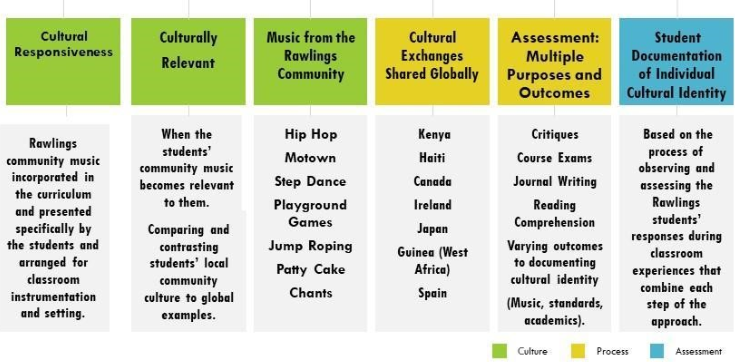
Source: Own preparation
The Rawlings Approach to Observing and Assessing Student Cultural Responsiveness (DeVito et al., 2019) comprises four phases designed to foster cultural engagement and develop students' understanding of their cultural musical identity. Phase One focuses on cultural relevancy and involves students sharing and arranging music experiences from their homes, communities, and generational influences. This phase also includes games and activities observed during recess and after-school periods. The incorporation of these musical elements into the classroom curriculum facilitates students' formalization of their understanding of culturally relevant community music.
Phase Two involves global cultural exchanges and the development of alternative assessment strategies. Online cultural exchanges are conducted with music education professors, community musicians, and students from various countries such as Taiwan, Spain, Ireland, Kenya, Guinea, Brazil, Canada, Colombia, and Haiti. These exchanges allow participants to share Rawlings community music and international demonstrations, fostering a global perspective. The topics and exchanges are determined collaboratively by the participants, and students have access to relevant books to enhance their understanding of each region prior to the live online sessions. Additionally, reading and writing exercises are being developed to compare styles, cultures, and experiences from the online exchanges.
In Phase Three, introductory assessments of student engagement are conducted through STEAM-based approaches. Students utilize the information and experiences from Phases One and Two to further refine their interpretation of their cultural musical identity. Various STEAM-based activities and documentation methods are employed to facilitate this process. The end-of-year course exams in the district are modified to ensure cultural relevancy in the assessment process. Rawlings teachers develop practice exercises that align with the culturally responsive curriculum implemented in the classroom, replacing the test preparation questions developed by district music teachers. This approach seeks to create an assessment that reflects the culturally responsive and relevant integrated curriculum and pedagogy developed within the Rawlings community.
Rawlings Elementary School, currently designated as an underperforming school with below-average literacy achievement, is viewed as a context rich in complexity. The aim is to co-construct a culturally responsive and relevant integrated curriculum and transformative pedagogy within this context. As part of the project, students engage with international educators through distance education, using video-based communication tools to interact with educators and musicians from around the world. Students are empowered to recognize and adapt culturally relevant elements, collaborate in creating their own music, and share it with others globally. This experience exposes students to their own potential and the role they can play in the broader world, expanding their horizons beyond their previous awareness, as demonstrated by their limited knowledge of countries on a map.
In the culmination of the first year of the project, students from Rawlings Elementary School were accepted to present at the International Symposium on Assessment in Music Education (ISAME7) held at the University of Florida. These students acted as expert clinicians, discussing their community, cultural traditions, and generational influences. They presented the results of classroom engagements that facilitated the culturally responsive curriculum, showcasing both musical and academic achievements. This experience highlighted the transformation of students who were once discouraged from tapping on walls and desks to becoming confident presenters with the potential to excel in various professional roles such as business, sales, or even academia. This journey exemplifies the belief that what is seen in students and what they can become are often distinct, emphasizing the importance of entrepreneurial inclusion and empowering students to discover their potential through music and academic connections.
Suggestions for Music Teachers to Teach Popular Community Music and Foster Entrepreneurialism within the Student Cohort Link to this section: Suggestions for Music Teachers to Teach Popular Community Music and Foster Entrepreneurialism within the Student Cohort
Observation plays a crucial role in understanding the potential for entrepreneurialism within the student cohort. It is essential to recognize that initial observations may not fully reveal the possibilities that can be realized. For instance, when students engage in rhythmic activities, such as playing rhythms on desks and tables, there exists a generational aspect that goes beyond mere nuisance or disruption. As students are encouraged to engage in discussions about the origins of these rhythms, a clear realization emerges: they are intricately woven into the fabric of the community. Students attribute these rhythms to various sources, including the church, family members who are musicians, improvisations on apartment steps using sticks, and playground games and chants that have evolved over generations. Contrary to the common practice of discouraging such rhythmic expressions in subjects like math and English, embracing these community-based rhythms, riffs, and music can provide valuable opportunities for teaching academic concepts in language arts, geography, and mathematics. Gaining insights from parents and the wider community is crucial in this endeavor. Through active information-seeking and meaningful engagement with parents and community members, teachers can cultivate a collaborative environment that strives to accomplish shared goals. For instance, at Rawlings Elementary, the goal is to strive for a Latin Grammy and international sharing of students' musical creations. It is important not to underestimate the capacity of elementary students to comprehend complex concepts. In interviews conducted with students regarding the origins of their musical experiences, their responses consistently revolved around the Rawlings community. They identified sources such as a church, musical family members, local ensemble experiences, siblings, and improvisations inspired by popular music. These experiences instill skills that are applicable to various scenarios students will encounter both now and in the future. The message that should resonate is that the Fine Arts form an integral part of students' holistic learning, bridging the gap between real-life experiences and academic development.
At the International Symposium on Assessment in Music Education (ISAME7) conference, students from Rawlings Elementary showcased their musical performances, and their achievements were witnessed by Corey Collins, a full-time behavioral science practitioner. Collins (DeVito et al., 2020) noted that music performance not only cultivates leadership skills but also provides a powerful platform for self-expression. The demonstration of cultural relevancy at the conference empowered students, allowing them to take ownership of their learning and express their knowledge and personal experiences through the music and rhythms of their lives. Dr. DeVito's efforts have created a safe space where students are encouraged to explore their imagination, thereby unlocking their unlimited potential.
Issues Faced by Music Entrepreneurship Teachers in Secondary Schools Link to this section: Issues Faced by Music Entrepreneurship Teachers in Secondary Schools
Music entrepreneurship teachers in secondary schools, particularly those working in Title 1 elementary schools, often face various challenges in their roles. These challenges can stem from several sources, including limited resources, lack of support, and systemic barriers. One major issue is the scarcity of funding for music programs in underprivileged schools. Limited financial resources can restrict the availability of musical instruments, technology, and other necessary resources for teaching entrepreneurship skills effectively. This disparity in resources exacerbates the existing achievement gap and hinders students' access to entrepreneurial opportunities in the music industry. Furthermore, music entrepreneurship teachers may encounter a lack of support from administrators and school policymakers. The importance of music entrepreneurship education may not be fully recognized or prioritized in the overall curriculum and school policies. This can result in a lack of professional development opportunities for teachers, inadequate time dedicated to entrepreneurship education within the curriculum, and limited collaboration with external partners, such as local musicians or cultural organizations.
Opportunities for Secondary School Music Entrepreneurship Educators Link to this section: Opportunities for Secondary School Music Entrepreneurship Educators
Despite these challenges, music entrepreneurship teachers also have opportunities to address and overcome these issues. Firstly, they can advocate for the inclusion of music entrepreneurship education in school policies and curricula. By highlighting the value of entrepreneurship skills and their relevance to students' future success, teachers can contribute to a shift in mindset among administrators and policymakers. Collaboration with other educators and stakeholders can strengthen the collective voice and increase the likelihood of policy changes and resource allocations that support music entrepreneurship education.
Moreover, music entrepreneurship teachers can seek out external partnerships and community collaborations to enrich students' learning experiences. Engaging local musicians, industry professionals, and entrepreneurs as guest speakers, mentors, or workshop facilitators can provide valuable insights and real-world perspectives. Creating opportunities for students to showcase their entrepreneurial ventures through performances, exhibitions, or competitions can foster their confidence and motivation.
Issues Faced by Administrators and County School Policy Makers Link to this section: Issues Faced by Administrators and County School Policy Makers
Administrators and county school policy makers may face challenges in prioritizing music entrepreneurship education due to various reasons. Limited financial resources, competing priorities, and a lack of awareness about the potential impact of entrepreneurship skills in music education can hinder their support for this field. Additionally, navigating bureaucratic processes and policy constraints may limit their ability to implement systemic changes effectively.
Opportunities for Administrators and County School Policy Makers Link to this section: Opportunities for Administrators and County School Policy Makers
Administrators and county school policymakers have opportunities to address these challenges and support music entrepreneurship teachers. Firstly, they can allocate sufficient funding for music programs, especially in Title 1 elementary schools, to ensure equal opportunities for all students. By recognizing the value of music entrepreneurship education and its potential to empower students, administrators can prioritize the allocation of resources for instruments, technology, professional development, and community partnerships. Engaging in dialogue and collaboration with music entrepreneurship teachers is vital. Administrators and policymakers can seek input from teachers to understand their needs and challenges better. They can provide platforms for teachers to share best practices, success stories, and innovative approaches to music entrepreneurship education. This collaboration can lead to the development of supportive policies and guidelines that encourage the integration of entrepreneurship skills into music curricula and promote sustainable practices.
While music entrepreneurship teachers in secondary schools, particularly those in Title 1 elementary schools, face challenges in their roles, there are opportunities for collaboration and change. Championing the incorporation of music entrepreneurship education, forging partnerships, and highlighting the significance of entrepreneurial skills enables teachers specializing in music entrepreneurship to spearhead impactful transformations. Additional experiences such as those described and highlighting the concept of entrepreneurship by having professionals share their expertise in regional and national music education conferences could create additional awareness of this field. Administrators and county school policymakers have the power to address resource disparities, revise policies, and create an enabling environment for music entrepreneurship education. Together, they can foster a culture that values music entrepreneurship as a pathway for student success and empower students to explore their creative potential, and embrace entrepreneurial opportunities in the music industry. The present study could have been done entirely with Zoom, email, and the time it takes for discussion with community musicians and entrepreneurs in the field of music.
Gains of the Study Link to this section: Gains of the Study
The Rawlings Approach to Observing and Assessing Student Cultural Responsiveness offers several significant gains for music education in diverse student cohorts. Firstly, by incorporating popular community music into the curriculum, students are provided with a sense of ownership and connection to their cultural identities. This approach fosters engagement and enthusiasm among students, leading to increased motivation and active participation in their learning. Moreover, the integration of global cultural exchanges enables students to develop a broader understanding of music from different regions, promoting cultural awareness and empathy. The collaborative nature of the approach also cultivates teamwork and communication skills, essential attributes for future entrepreneurial endeavors. Ultimately, the gains of this study lie in empowering students, fostering their creativity, and nurturing their entrepreneurial mindset through the lens of popular community music.
Limitations Link to this section: Limitations
Despite its merits, the Rawlings Approach is not without limitations. One notable limitation is the potential resource constraints faced by schools and educators in implementing such a comprehensive approach. Limited access to technology, financial resources, and specialized training may hinder the full realization of the approach's potential. Additionally, time constraints within the school curriculum pose challenges in dedicating sufficient time to integrate popular community music in music education. Furthermore, the generalizability of the findings may be limited to similar student cohorts and may require adaptation to suit different cultural contexts. These limitations should be considered when implementing and scaling the approach to ensure its feasibility and effectiveness. The cohort of international community musicians came predominantly from the International Society for Music Education’s Community Music Activity Commission but global connections via Zoom can be made over time and as an alternative to international connections, diverse members of the local community, city or region who would like to engage with the school could participate.
Suggestions for Secondary School Music Entrepreneurship Educators Link to this section: Suggestions for Secondary School Music Entrepreneurship Educators
Secondary school music educators seeking to instill entrepreneurialism among their students can draw inspiration from the Rawlings Approach. First and foremost, educators should embrace students' cultural backgrounds and incorporate popular community music into the curriculum. Acknowledging and valuing students' musical expertise derived from their communities, educators can foster a sense of ownership and cultural pride. Additionally, integrating cross-curricular activities and collaborative projects can promote interdisciplinary learning and develop students' entrepreneurial skills. Emphasizing real-world applications of music and encouraging students to explore entrepreneurial opportunities within the music industry can further enhance their entrepreneurial mindset and readiness for future endeavors.
Suggestions for Administrators and County School Policy Makers Link to this section: Suggestions for Administrators and County School Policy Makers
Administrators play a crucial role in supporting and facilitating the integration of popular comnity music as a means of promoting entrepreneurialism in music education. To create an enabling environment, administrators should prioritize the allocation of resources, including technology, instruments, and training, to support the implementation of the approach. They should also foster collaboration and partnerships with local musicians, artists, and cultural organizations to provide students with diverse musical experiences and mentorship opportunities. Additionally, administrators can encourage professional development opportunities for teachers to enhance their understanding of culturally responsive pedagogy and entrepreneurial approaches in music education.
County school policymakers have the potential to create systemic changes that promote entrepreneurialism in music education. They can consider revising curriculum guidelines and standards to explicitly include popular community music and entrepreneurial skills development. Providing funding for music programs, particularly in underprivileged schools, can address resource disparities and create equitable opportunities for students to engage with music entrepreneurship. Policymakers should also explore partnerships with community organizations, local businesses, and industry professionals to facilitate mentorship programs, internships, and performance opportunities for students. Integrating entrepreneurship into music education policies empowers students and nurtures their entrepreneurial talents, allowing county school policymakers to drive positive change.
Future Research & Conclusion Link to this section: Future Research & Conclusion
Future research in this field should continue to explore the effectiveness and impact of integrating popular community music as a catalyst for entrepreneurialism in diverse student cohorts. Comparative studies can investigate the outcomes of implementing the Rawlings Approach across different cultural contexts and student populations. Longitudinal studies tracking the educational and career trajectories of students who have undergone this approach can provide valuable insights into the long-term benefits and impacts on entrepreneurial success. Additionally, further research can delve into the pedagogical strategies and instructional approaches that optimize the integration of popular community music and entrepreneurship education. In conclusion, music entrepreneurship education provides valuable opportunities for students to develop skills that can benefit them in various aspects of their lives. However, there are challenges that music entrepreneurship teachers face in Title 1 elementary schools, including limited resources and support from administrators and policymakers. To overcome these challenges, it is essential to develop partnerships with community organizations and to involve parents and other stakeholders in the education process. Additionally, administrators and policymakers can provide more funding and support for music entrepreneurship programs in schools. Further research is needed to explore the impact of music entrepreneurship education on students' academic and personal development. With collaborative efforts and a commitment to music entrepreneurship education, we can help students cultivate the skills they need to succeed in the 21st century.
References Link to this section: References
- Bartleet, B.-L., Cain, M., Tolmie, D., Power, A., & Shiobara, M. (Eds.). (2018). Community Music in Oceania: Many Voices, One Horizon. University of Hawai’i Press. http://www.jstor.org/stable/j.ctvvn0j7
- DeVito, D., Telles, T., Hidalgo B. (2020). Culturally responsive research projects in a Title I elementary center for fine arts [online]. Visions of Research in Music Education, 35. Available at: http://www.rider.edu/~vrme. (Accessed: 10th September 2021).
- International Center for Leadership in Education (2005). Successful schools: From research to action plan. Rexford, NY: Daggett, W. R.
- Rawlings Elementary Center for Fine Arts. (2020, May, 10th). Vision Statement. Rawlings Elementary Center for Fine Arts. https://www.sbac.edu/domain/7226
- Serdyukov, P. Innovation in education: what works, what doesn’t, and what to do about it? Journal of Research in Innovative Teaching and Learning, v10, issue 1.
- U.S. Department of Education. (2018). Improving basic programs operated by local education agencies (Title I, Part A): Purpose. Retrieved August 10, 2018, from https://www2.ed.gov/programs/titleiparta/index.html
- Varner, E. (2018). Holistic Development and Music Education: Research for Educators and Community Stakeholders. Journal of General Music Education. https://journals.sagepub.com/toc/gmtb/32/2. Retrieved May 12, 2023.
About the Author Link to this section: About the Author
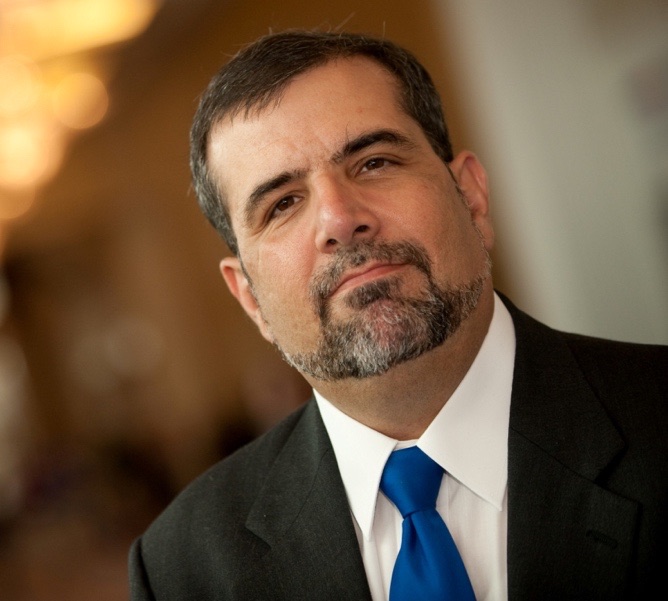
Dr. Donald DeVito, a distinguished music educator, is part of the faculty at the Rawlings Elementary Center for Fine Arts in Gainesville, Florida. Recognized as the National CEC Teacher of the Year in 2011, he has made significant contributions to the field, serving on the board of the International Society for Music Education and publishing extensively on networking universities, schools, and community-based programs. Additionally, Dr. DeVito has co-founded the Haitian Center for Inclusive Education, showcasing his dedication to inclusive education and collaboration with the Council for Exceptional Children.